Homes without Windows
Homes without Windows
Chandu Maheria, Hemang AshwinKumar
buy now
Amazon- Publisher : Juggernaut
- Publication date : 27 May 2026
- Print length : 256 pages
- ISBN-10 : 9353459389
-
ISBN-13 : 978-9353459383
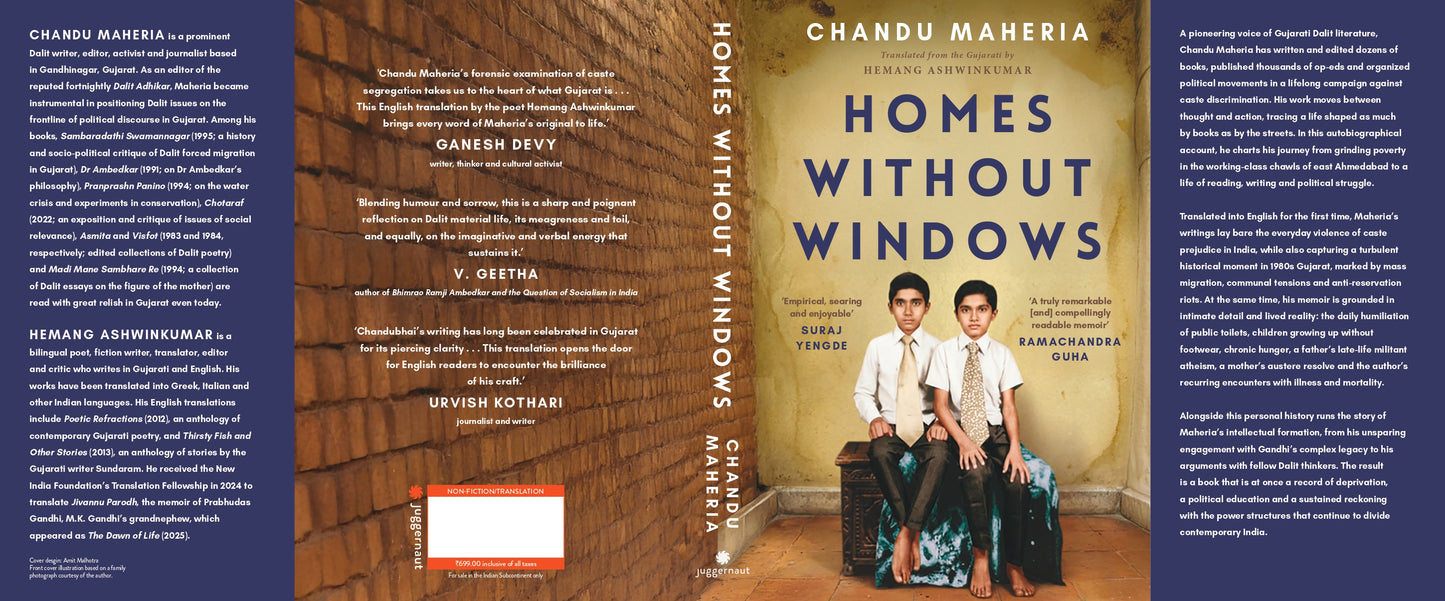
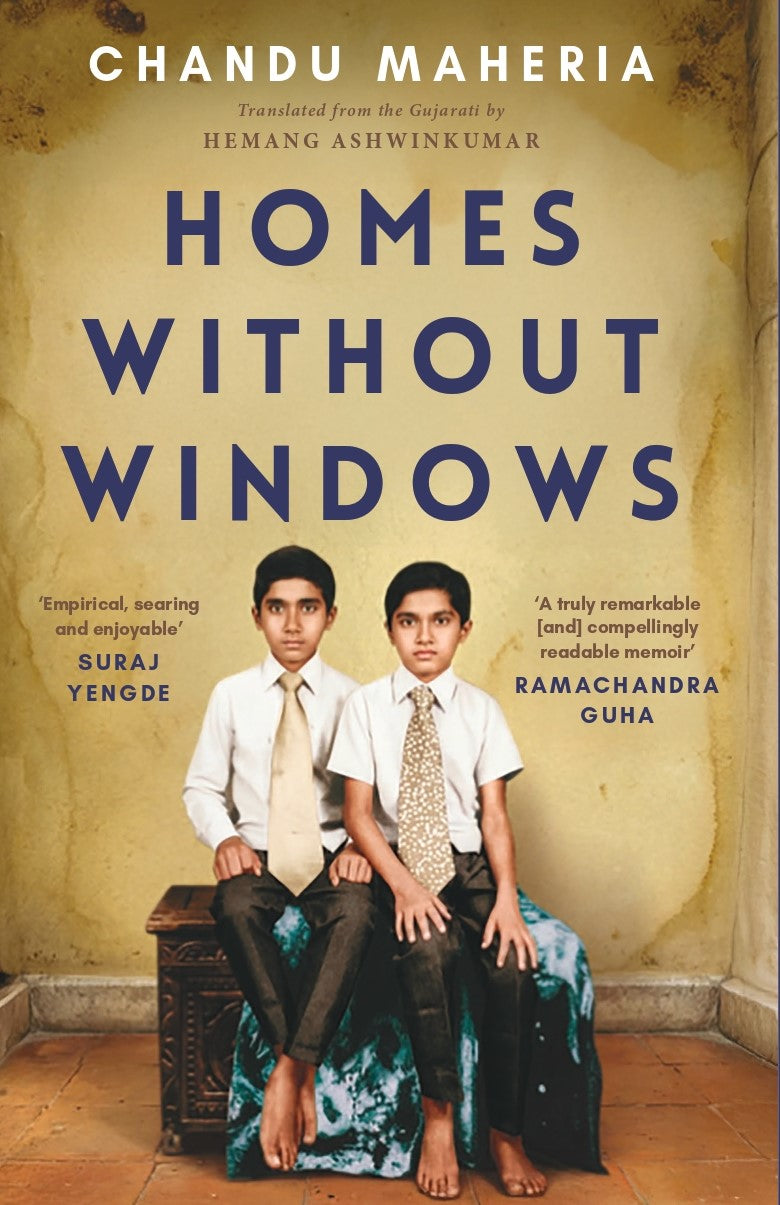
A pioneering voice of Gujarati Dalit literature, Chandu Maheria has written and edited dozens of books, published thousands of op-eds and organized political movements in a lifelong campaign against caste discrimination. His work moves between thought and action, tracing a life shaped as much by books as by the streets. In this autobiographical account, he charts his journey from grinding poverty in the working-class chawls of east Ahmedabad to a life of reading, writing and political struggle.
Translated into English for the first time, Maheria’s writings lay bare the everyday violence of caste prejudice in India, while also capturing a turbulent historical moment in 1980s Gujarat, marked by mass migration, communal tensions and anti-reservation riots. At the same time, his memoir is grounded in intimate detail and lived reality: the daily humiliation of public toilets, children growing up without footwear, chronic hunger, a father’s late-life militant atheism, a mother’s austere resolve and the author’s recurring encounters with illness and mortality.
Alongside this personal history runs the story of Maheria’s intellectual formation, from his unsparing engagement with Gandhi’s complex legacy to his arguments with fellow Dalit thinkers. The result is a book that is at once a record of deprivation, a political education and a sustained reckoning with the power structures that continue to divide contemporary India.
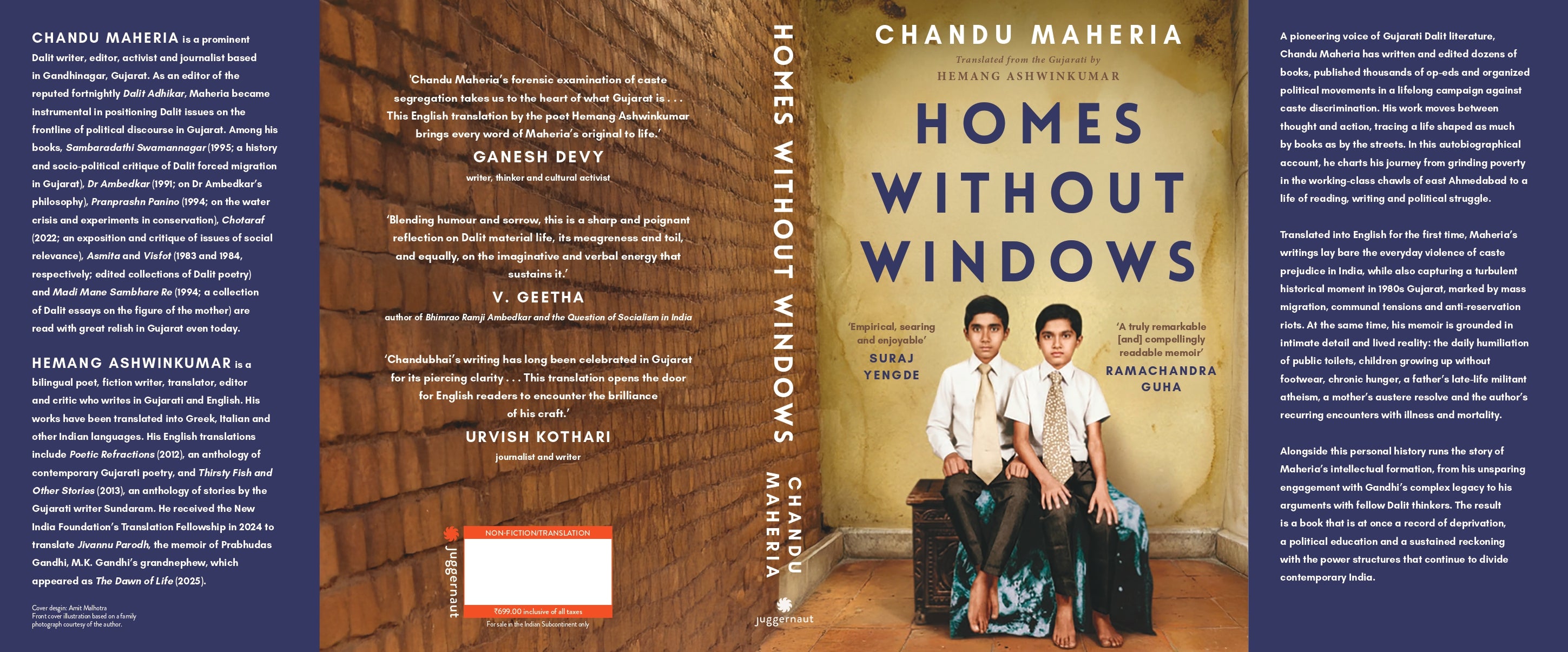
A pioneering voice of Gujarati Dalit literature, Chandu Maheria has written and edited dozens of books, published thousands of op-eds and organized political movements in a lifelong campaign against caste discrimination. His work moves between thought and action, tracing a life shaped as much by books as by the streets. In this autobiographical account, he charts his journey from grinding poverty in the working-class chawls of east Ahmedabad to a life of reading, writing and political struggle.
Translated into English for the first time, Maheria’s writings lay bare the everyday violence of caste prejudice in India, while also capturing a turbulent historical moment in 1980s Gujarat, marked by mass migration, communal tensions and anti-reservation riots. At the same time, his memoir is grounded in intimate detail and lived reality: the daily humiliation of public toilets, children growing up without footwear, chronic hunger, a father’s late-life militant atheism, a mother’s austere resolve and the author’s recurring encounters with illness and mortality.
Alongside this personal history runs the story of Maheria’s intellectual formation, from his unsparing engagement with Gandhi’s complex legacy to his arguments with fellow Dalit thinkers. The result is a book that is at once a record of deprivation, a political education and a sustained reckoning with the power structures that continue to divide contemporary India.
Author Bios:
Chandu Maheria is a prominent Dalit writer, editor, activist and journalist based in Gandhinagar, Gujarat. As an editor of the reputed fortnightly Dalit Adhikar, Maheria became instrumental in positioning Dalit issues on the frontline of political discourse in Gujarat. Among his books, Sambaradathi Swamannagar (1995; a history and socio-political critique of Dalit forced migration in Gujarat), Dr Ambedkar (1991; on Dr Ambedkar’s philosophy), Pranprashn Panino (1994; on the water crisis and experiments in conservation), Chotaraf (2022; an exposition and critique of issues of social relevance), Asmita and Visfot (1983 and 1984, respectively; edited collections of Dalit poetry) and Madi Mane Sambhare Re (1994; a collection of Dalit essays on the figure of the mother) are read with great relish in Gujarat even today.
Hemang Ashwinkumar is a bilingual poet, fiction writer, translator, editor and critic who writes in Gujarati and English. His works have been translated into Greek, Italian and other Indian languages. His English translations include Poetic Refractions (2012), an anthology of contemporary Gujarati poetry, and Thirsty Fish and Other Stories (2013), an anthology of stories by the Gujarati writer Sundaram. He received the New India Foundation’s Translation Fellowship in 2024 to translate Jivannu Parodh, the memoir of Prabhudas Gandhi, M.K. Gandhi’s grandnephew, which appeared as The Dawn of Life (2025).
Editor’s note: In the first impression of this book, the translator’s introduction contained factual and conceptual errors regarding an episode described on pp. xix–xx. The corrected version appears in the subsequent impressions and in the ebook edition. We regret the error.
Chandu Maheria is a prominent Dalit writer, editor, activist and journalist based in Gandhinagar, Gujarat. As an editor of the reputed fortnightly Dalit Adhikar, Maheria became instrumental in positioning Dalit issues on the frontline of political discourse in Gujarat. Among his books, Sambaradathi Swamannagar (1995; a history and socio-political critique of Dalit forced migration in Gujarat), Dr Ambedkar (1991; on Dr Ambedkar’s philosophy), Pranprashn Panino (1994; on the water crisis and experiments in conservation), Chotaraf (2022; an exposition and critique of issues of social relevance), Asmita and Visfot (1983 and 1984, respectively; edited collections of Dalit poetry) and Madi Mane Sambhare Re (1994; a collection of Dalit essays on the figure of the mother) are read with great relish in Gujarat even today.
Hemang Ashwinkumar is a bilingual poet, fiction writer, translator, editor and critic who writes in Gujarati and English. His works have been translated into Greek, Italian and other Indian languages. His English translations include Poetic Refractions (2012), an anthology of contemporary Gujarati poetry, and Thirsty Fish and Other Stories (2013), an anthology of stories by the Gujarati writer Sundaram. He received the New India Foundation’s Translation Fellowship in 2024 to translate Jivannu Parodh, the memoir of Prabhudas Gandhi, M.K. Gandhi’s grandnephew, which appeared as The Dawn of Life (2025).
Editor’s note: In the first impression of this book, the translator’s introduction contained factual and conceptual errors regarding an episode described on pp. xix–xx. The corrected version appears in the subsequent impressions and in the ebook edition. We regret the error.